
Of all the rooms in a house, the bathroom is the one that punishes poor planning the hardest. It’s small, it’s full of water and pipes, and almost every part of it is governed by rules. Rush in and you’ll hit budget blowouts, delays or compliance headaches before the first tile is even down.
That’s why the real work starts long before demolition. Get the planning right and the build itself tends to run smoothly. Get it wrong and you’ll feel it in your hip pocket.
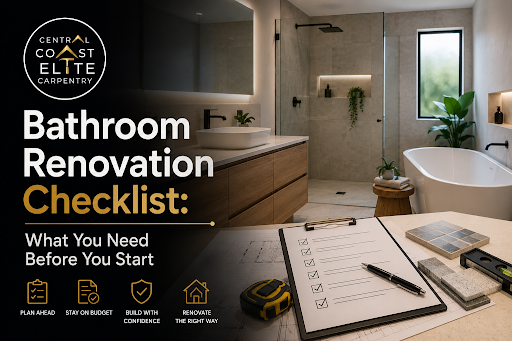
This checklist walks through everything to line up before you start, drawn from years of bathroom renovations Central Coast NSW homeowners have trusted us with. Tick these off and you’ll head into your reno with your eyes wide open.
Why Planning Beats Pretty Tiles
It’s tempting to start with the fun stuff, the tiles, the tapware, the freestanding bath. But the success of a bathroom reno is decided by what happens underneath and behind all of that.
Older homes around the Central Coast are notorious for hiding surprises once the walls come off: tired plumbing, rotten subfloors, or old waterproofing that’s quietly failed. A well-managed home renovation, backed by a contingency fund, is what keeps those surprises from derailing the whole project.
Spend two to four weeks planning before demolition. It’s the cheapest insurance you’ll ever buy.
Step 1: Sort the Budget (and a Contingency)
Set your budget before you fall in love with finishes, not after. Work out what you can spend, then break it down across the real cost drivers so nothing blindsides you later. And always hold back a contingency, around 10–20% is sensible, for the surprises older homes love to spring.
Your Bathroom Remodel Estimate Checklist
A realistic estimate should account for every line below, not just the pretty bits:
|
Cost area |
What it covers |
|---|---|
|
Demolition & disposal |
Stripping out the old bathroom and removing the waste |
|
Plumbing & electrical |
Rough-in, relocations and fit-off by licensed trades |
|
Waterproofing |
A compliant membrane and certificate (AS 3740) |
|
Tiling |
Floor and wall tiles, screeding and labour |
|
Vanity & cabinetry |
Custom or supplied joinery and storage |
|
Fixtures & tapware |
Basin, toilet, shower, bath, mixers and accessories |
|
Contingency |
10–20% held back for hidden surprises |
One honest note: a full bathroom renovation can’t be done for a few thousand dollars. Anything that touches plumbing, waterproofing or tiling needs licensed trades, and that’s reflected in the price.
Step 2: Lock In the Layout and Design
Decide how the room needs to function before you choose a single fixture. Once the layout is settled, everything else, fixtures, lighting and storage, falls into place around it. A few things are worth nailing early:
- Layout and flow. Keep the plumbing where it is if you can, because moving it adds real cost.
- Storage. Plan a vanity, recessed niches and shelving so the finished room stays clutter-free.
- Ventilation and light. A good exhaust fan, and ideally a window, keeps mould and moisture at bay. A frosted or louvre aluminium window adds natural light and airflow without giving up privacy.
- Lighting. Layer bright task lighting at the mirror with softer ambient light elsewhere.
- Durable materials. Bathrooms cop constant humidity, so choose finishes built to handle it.
Step 3: Get the Compliance Right
This is where DIY dreams tend to come undone. In NSW, bathrooms are tightly regulated for good reason: water damage is one of the most common and costly building defects there is.
Waterproofing
Waterproofing must comply with Australian Standard AS 3740 and be carried out by a licensed contractor. The membrane runs across the floor and at least 150mm up the walls, with shower areas waterproofed to a minimum of 1800mm high. Crucially, the waterproofing certificate must be issued before tiling starts, so keep it safe, since you’ll need it for insurance and resale.
Licensed Trades
Certain work legally requires licensed professionals in NSW, with no exceptions:
|
Task |
What NSW requires |
|---|---|
|
Plumbing |
A licensed plumber (Plumbing Code of Australia) |
|
Electrical |
A licensed electrician |
|
Waterproofing |
A licensed contractor, compliant with AS 3740 |
|
Any work over $5,000 |
A licensed building contractor |
Council Approval
Most internal, like-for-like bathroom updates don’t need council approval. But if you’re moving walls, changing the layout or significantly relocating plumbing, you may need a CDC or DA, so check the NSW Planning Portal or ask your builder first. For anything structural, a licensed builder keeps it all compliant, and jobs over $20,000 also need Home Building Compensation insurance.
Step 4: Choose the Right Team
The team you pick matters as much as the materials. Look for trades who are licensed and insured, communicate clearly, and give you a detailed, itemised quote rather than a vague lump sum.
For the joinery side, experienced Central Coast carpenters can build a custom vanity and storage that fit your space exactly, something a flat-pack unit rarely manages. It’s well worth comparing a few quotes so you’re weighing up like for like.
Step 5: Know the Order of Work
A bathroom comes together in a specific sequence, and skipping or reordering steps causes expensive rework. The typical order looks like this:
- Demolition and rubbish removal
- Plumbing and electrical rough-in
- Waterproofing, with the certificate issued before tiling
- Screeding and tiling
- Vanity and cabinetry installation
- Fixture fit-off, basin, toilet and tapware
- Shower screen, measured after tiling is done
- Electrical fit-off, lights and exhaust fan
- Accessories and final finishes
Knowing the sequence helps you follow progress and spot if a corner is being cut, like tiling before the waterproofing has been signed off.
Expert tip: Never let anyone tile over waterproofing that hasn’t been certified. Once the tiles are down, the only way to fix a dodgy membrane is to rip them all up again.
Planning a bathroom reno? Central Coast Elite Carpentry handles bathroom renovations end to end, with licensed trades and clear, itemised quotes. Get in touch for a free consultation.
Furniture and Storage: The Vanity and Beyond
Storage is what keeps a finished bathroom looking as good as it did on day one, and this is where built-in joinery really earns its keep.
- A custom vanity sized to your space, with drawers that work around the plumbing, makes the most of a small footprint.
- Recessed niches in the shower keep bottles off the floor without stealing room.
- A mirrored shaving cabinet adds storage with almost no visual footprint.
- Wall-hung vanities free up floor space and make the whole room feel larger.
These are exactly the pieces a skilled carpenter builds to measure. You can browse completed projects to see how custom joinery lifts a bathroom from merely functional to genuinely yours.
Frequently Asked Questions
What should I know before bathroom remodeling?
Before you start, sort your budget (with a contingency), settle the layout, and understand the compliance side: waterproofing must meet AS 3740, plumbing and electrical work need licensed trades, and any job over $5,000 must be done by a licensed contractor. Plan two to four weeks ahead, check whether you need council approval, and line up a team that gives you a clear, itemised quote.
Do I need council approval for a bathroom renovation on the Central Coast?
Usually not for an internal, like-for-like update, since replacing the vanity, shower, tiles and fixtures in the same spots is generally exempt. Approval (a CDC or DA) is more likely if you change the layout, move walls or significantly relocate plumbing. Check the NSW Planning Portal or ask your builder before you begin.
How long does a bathroom renovation take?
On site, most bathrooms take around two to four weeks, plus planning and material lead times beforehand. Curing times for waterproofing and screed, custom cabinetry, and any structural surprises can extend that. A good builder will give you a realistic schedule upfront.
Do I really need a licensed waterproofer?
Yes. Waterproofing must comply with AS 3740 and be carried out by a licensed contractor, with the certificate issued before tiling begins. Skipping it risks leaks, voided insurance and major repair bills, and it will show up when you come to sell.
How much should I budget for a bathroom renovation?
It depends heavily on size, materials and how much you change, but bathrooms are among the most expensive rooms per square metre because of the trades involved. Build your budget around the cost areas in the estimate checklist above, and always keep 10–20% aside for surprises.
Can a carpenter build a custom vanity?
Definitely. A custom vanity is one of the most popular reasons homeowners bring in a carpenter. Building to measure means the cabinetry fits your exact space, works around the plumbing, and matches the look you want, far more flexibly than an off-the-shelf unit.
Plan Well, Renovate Once
A bathroom renovation rewards preparation like few other projects. Sort the budget, settle the design, respect the compliance rules and line up the right team, and the build itself becomes the easy part.
Work through this checklist before you start, and you’ll sidestep the expensive surprises that catch out so many homeowners, and end up with a bathroom that’s built to last.
Ready to start your bathroom renovation? With 30 years of combined experience in carpentry and renovations, Central Coast Elite Carpentry will guide your project from first plan to final finish. Contact us today for your free quote.
